
Original Author: Lao Mo, PB Motorsports | April 2, 2022
One summer day in 2021, Fangzhou sent me a message: "Do you want to do that 12hr karting enduro?"
"Do we?"
"Let's do it!"
Too Fast to Crash was officially founded in the summer of 2021. With a budget of zero and gear cobbled together, we assembled six drivers who all shared the same characteristics: everyone had crashed themselves or others at the Sonoma 2-stroke kart track, everyone pounded their chests in frustration while playing iRacing at night, everyone wanted to drive fast — but no one had much money in their pockets, to the point where we even had to scrounge WD-40 from each other. Although these six drivers were old and poor, they showcased their skill and tactical grit at the 2021 12Hr Karting Enduro, bringing Northern California's work ethic and lap times down to SoCal. But the story that unfolded far exceeded our expectations — barely.
P.S. Thanks to the big bro from the neighboring team in a different class who taught us all kinds of tricks.
01 Professional vs. Amateur
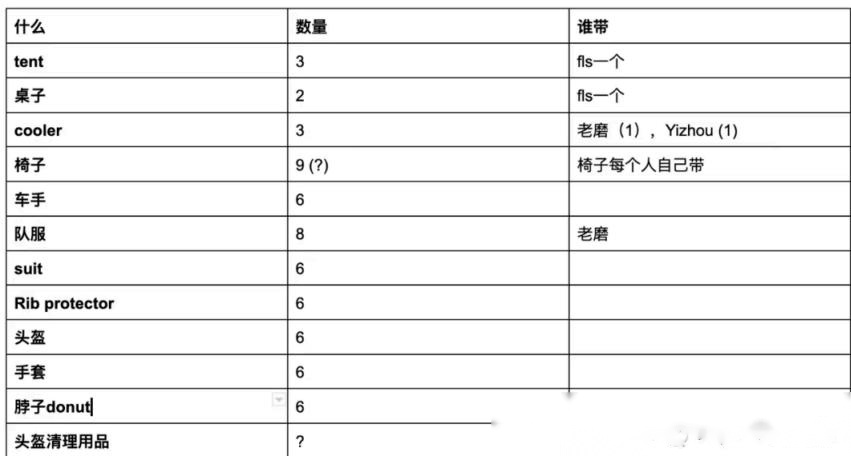
Outside of their racing careers, the six drivers of Too Fast to Crash make outstanding contributions to society. We have drivers (like Fred) who lead AI development in the traditional computer science sector, as well as drivers who rack their brains over the American logistics industry. Drawing on the experience accumulated in our respective fields, we all thought leading this team to victory would be child's play. Before setting off, the six drivers made detailed preparations in the group chat. Let me show you the fruits of our labor with our packing list:
Packing List
- Item | Quantity | Who's bringing it
- Tent | 3 | fis brings one
- Table | 2 | fis brings one
- Cooler | 3 | Lao Mo (1), Yizhou (1)
- Chair | 9 (?) | Everyone brings their own
- Driver | 6 |
- Team Uniform | 8 | Lao Mo
- Suit | 6 |
- Rib protector | 6 |
- Helmet | 6 |
- Gloves | 6 |
- Neck donut | 6 |
- Helmet cleaning supplies | ? | Fangzhou
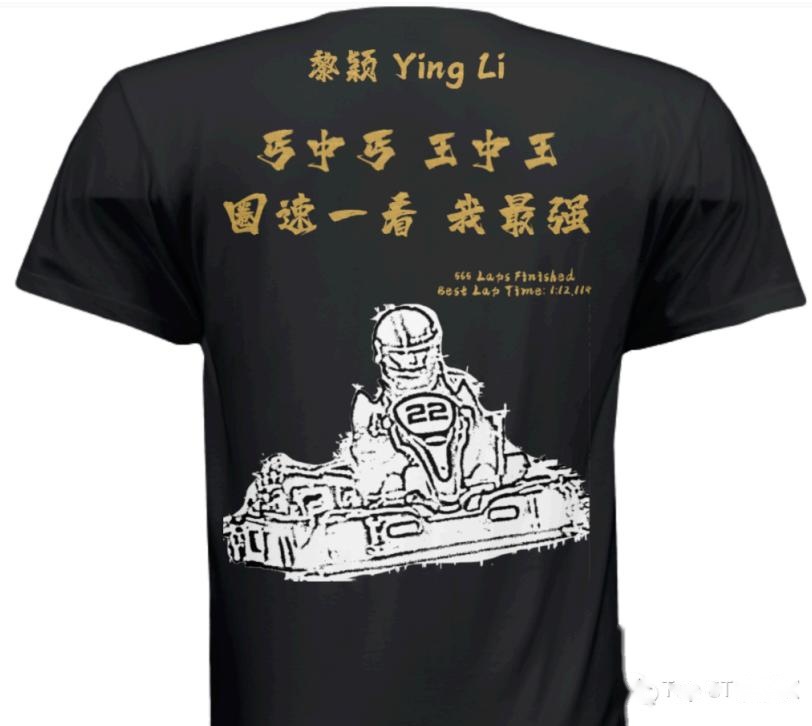
We brought three tents alone, which really embodied the phrase: "I've never fought such a well-funded battle in my life." Not only did we give our all materially, but we also put serious thought into the team's cultural and spiritual construction, specifically customizing team uniforms before departure.
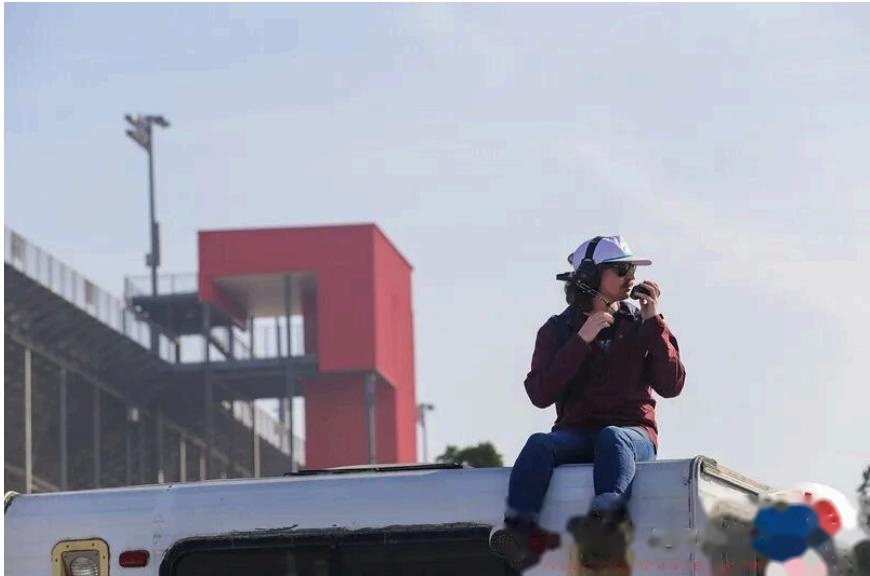
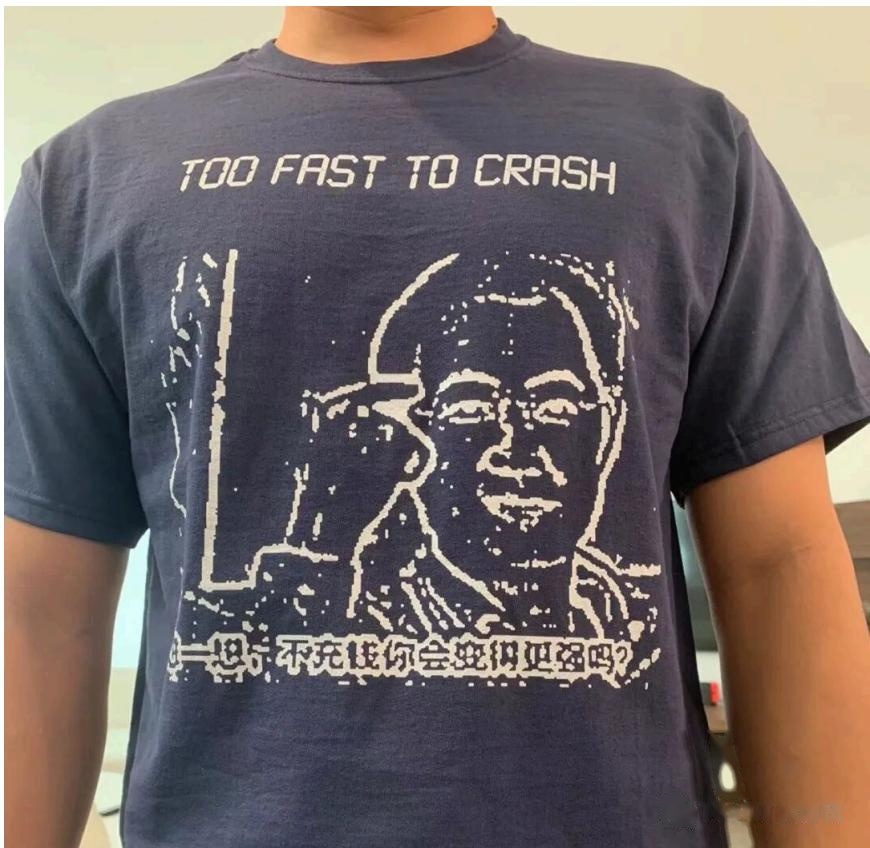
I am the designer of this shirt, and I believe my design skills have surpassed the quality of the code I usually contribute to my company. If you need custom team uniforms in the future, please contact me. If you ask me why I chose a portrait of "Papa Ma" and printed his famous quote on the shirt — well, I can't say I subconsciously predicted the tone and fate of this team, but you can't say it's completely unrelated either. Sometimes, when you've been poor for so long, what you fear most is what happens. Being poor on top of being poor gave me this state of mind, and this state of mind made us even poorer. In case you can't read the slogan clearly, let me type it out prominently for you:
Think about it — will you become stronger if you don't spend money? — Pony Ma
Later, I thought Afang's summary was spot on: "Before we left, we thought no one was more professional than us. When we got to the track, we found out no one was more amateur than us."
Readers might not have a clear concept of professional versus amateur, so let me show you this stark contrast. The pictures were all taken at the track.
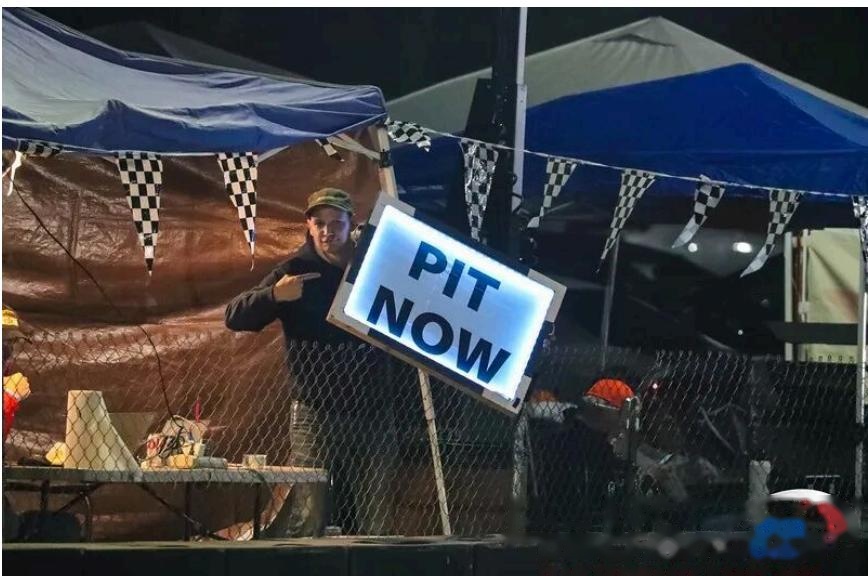
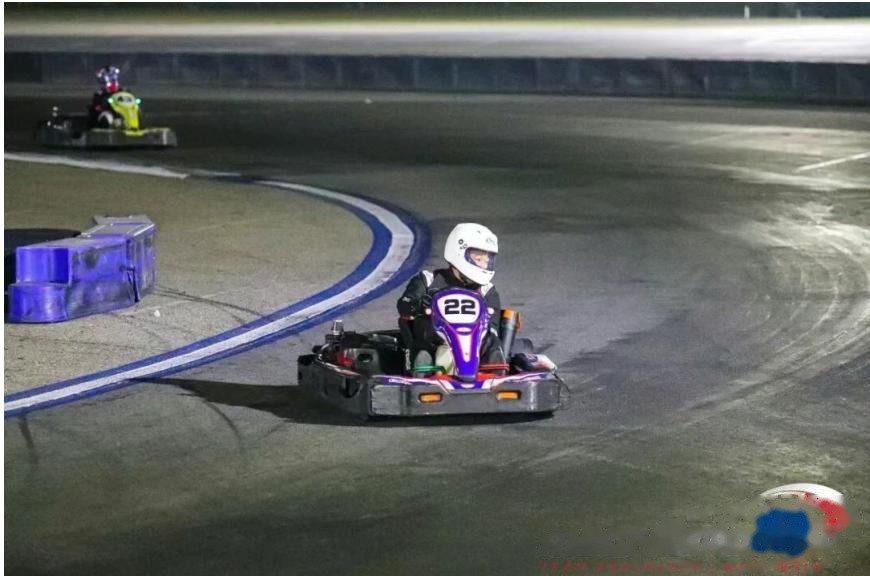
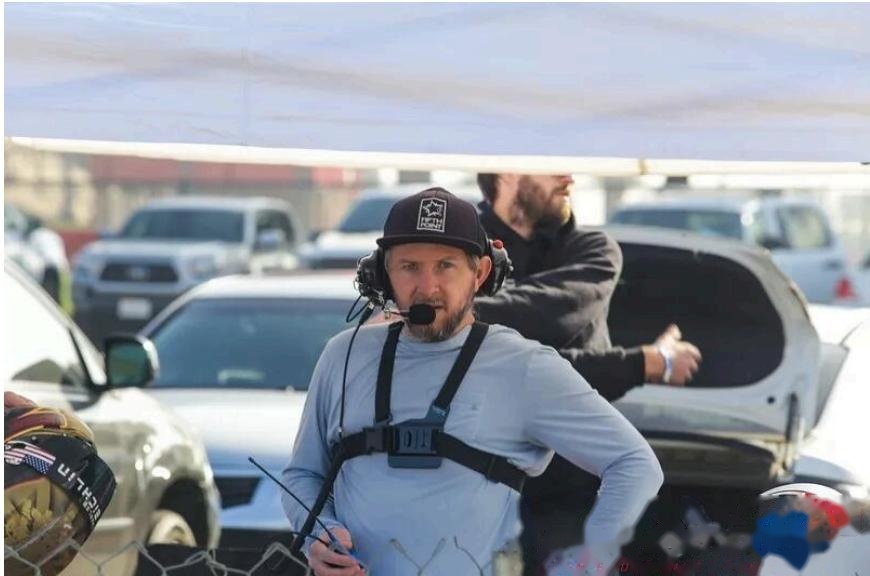
In contrast, here is a profile of our team. Taking myself as an example: a cheap children's helmet with a clear visor that blinded me during the day; a race suit with a broken zipper that required a whole procedure to operate every time — oh right, the race suit also had uncut threads hanging by my feet; racing shoes with a hole worn through; a balaclava mocked by Fangzhou as a "rotten rag"; dull eyes and bewildered operations.
Don't think the other drivers were much better off. Let me tell you something — feel it for yourselves. What does the title say? How many hours is this endurance race?
This damn endurance race was twelve hours! Twelve hours in the winter, which meant it got dark early. While other RVs and tents lit up bright lamps in the night, set up windbreaks, and their logistics teams prepared hot meals, we finally remembered... we brought tents but no lights? If that's not a mentally handicapped move, what is? Not having an RV to shower in was one thing, but we didn't have food either. We survived purely on a McDonald's delivery via DoorDash. One McDonald's meal to sustain us through a twelve-hour endurance race. We were so hungry we lost a few pounds in one day, and it took a week or two to regain the water weight.
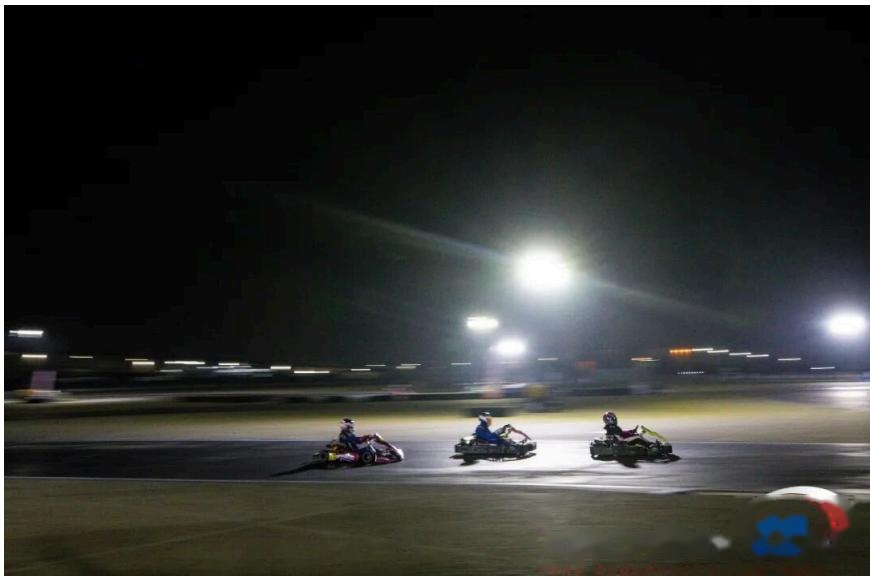
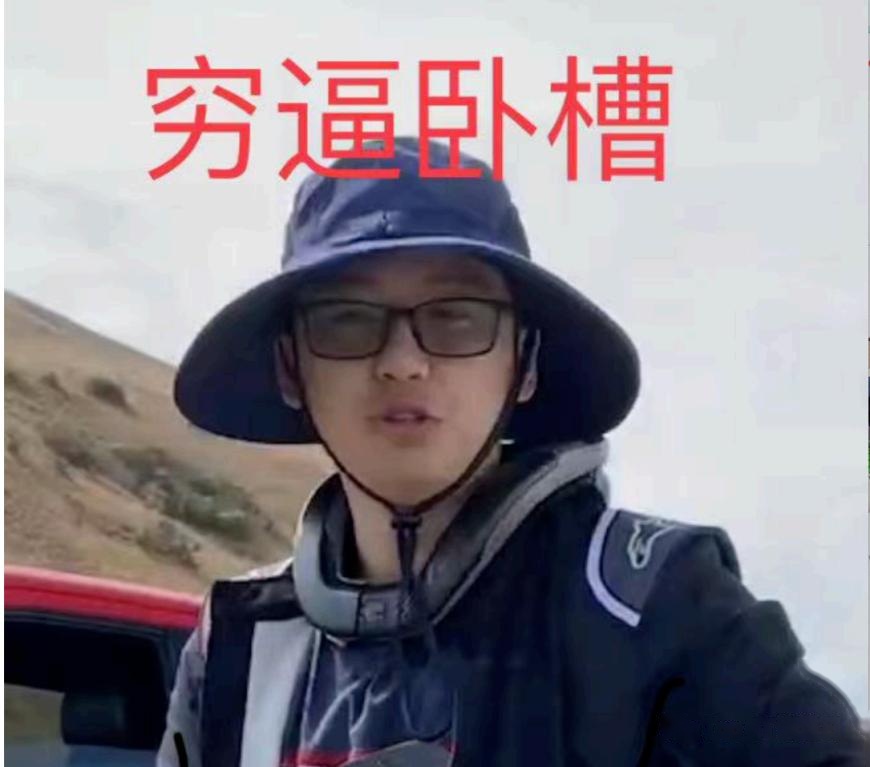
The sheer poverty of the entire team, from top to bottom, completely gave us away. Even though we usually flattered each other as "bosses," when it came down to the real, live-ammunition race, the sound of the few coins rattling in our pockets was unmistakable. You hear that sound? It's all hard coins — no soft paper bills.
Here, I advise everyone: if you drive slow, don't make excuses about how others have better cars or better tires. Stop talking trash — spend the money first, then talk.
That night, I kept thinking of Pony Ma's famous quote printed on my chest. I wanted to wear it over my heart as a life motto. Little did I know that the harder something is to get, the more you care about it.
02 We're Only Slightly Worse Than Zhou Guanyu's Strategist
I mentioned pre-race preparation earlier, and one of the main focuses was race strategy. When watching F1, we always mock the Ferrari pit wall. Everyone says a Ferrari strategist could just glance at Twitter to know what strategy is best, and that a dog in the Ferrari pit would be a better strategist. We thought the same; we all felt we were better than a dog. So, the night before the race at the Airbnb, everyone let their imaginations run wild, relying on their own understanding of racing to formulate an extremely rigorous race strategy and personnel arrangement. A large sheet of A4 paper was completely filled with driver change times and sequences, and we went to shower and sleep thoroughly satisfied.
On the morning of the second day, when we were barely recovering from the "professional vs. amateur" reality check, someone suddenly asked: "What's the refueling strategy? How many laps between fuel stops?"
I could only reply: "Teammate, great question. Let's go see what the gas station looks like!"
Here, the team must thank the big bro at the gas station. Not only did he show us how to pit and refuel, and the exit route, but he also casually mentioned: "A minimum of 36 driver changes."
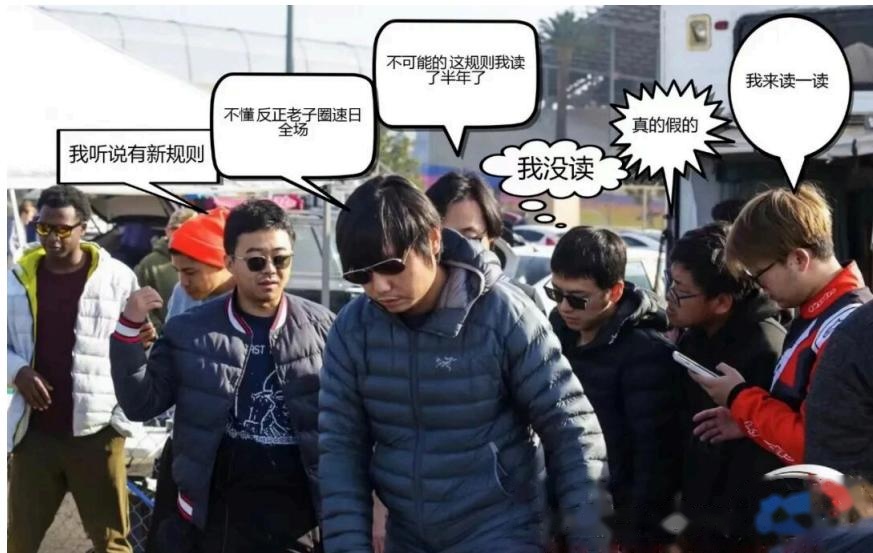
...Wait a minute. Nobody mentioned the number 36 all night yesterday. I only remembered people mentioning "2-hour driver change intervals" and "1.5-minute pit stop times." Thus, with thirty minutes left until the race start, this classic meme moment occurred:
Let me introduce the drivers first, from left to right: Lao Mo, Afang, Fangzhou, Shentu Yide, Allen, Yizhou.
Yes, you read that right. While this dialogue involves a bit of artistic license, 90% of it is a direct quote. We became the only team on the track where, after the race started, all the team drivers huddled around their phones, intensely studying a PDF. There was exciting overtaking and position changes happening, but no driver cared — for the first half hour, everyone was just questioning each other's English proficiency and test scores.
Understanding the rules is one thing, but planning a race strategy based on the abilities and characteristics of each driver in a complex race is ridiculously difficult. For the first time, I admitted I wasn't as good as the dog on the Ferrari pit wall. It got to the point where a teammate later asked: "Can we pay someone from our group chat to be our strategist?" Of course, the answer to this question leads back to: Think about it — will you become stronger if you don't spend money? When you don't have money, this is clearly a sad question.
03 The Do-or-Die Pursuit
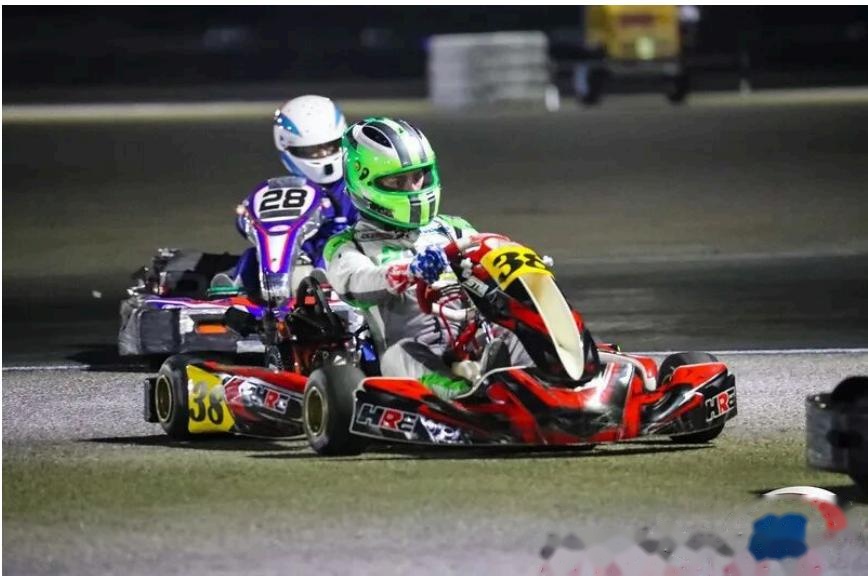
We may be poor in pocket, but not in spirit. Too Fast to Crash honed iron-like ribs at Sonoma (driving karts at Sonoma is very tough on the ribs, especially for older folks). During the first half of the race, we led our class with blazing lap times. However, in a twelve-hour endurance race, being one second faster per lap is incredibly rare. Pushing hard under the blazing sun for an hour might only gain you a forty-second advantage, and such an advantage can easily be wiped out by a single unexpected incident.
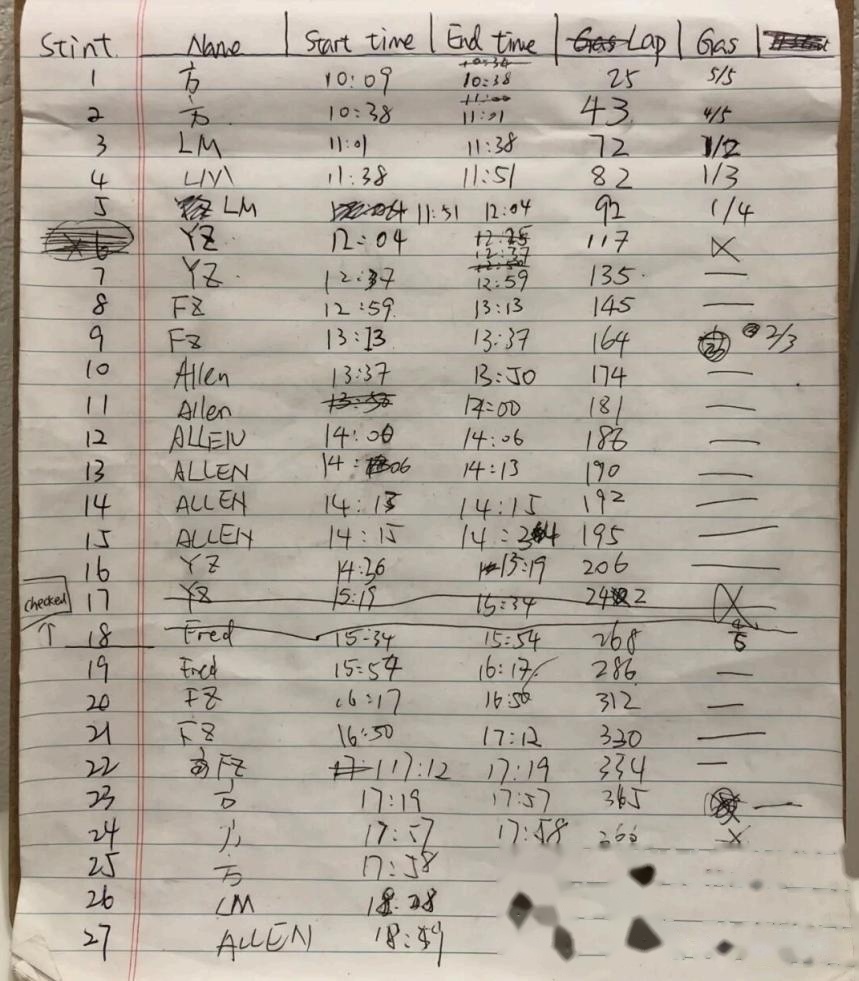
During driver changes and refueling stops, various errors and penalties proved fatal and amateurish. Every driver on the team made mistakes during the pit stops to some degree, completely erasing our lap-time advantage. By the time we approached the sixth hour, we had already lost our lead, dropping from first to a chasing position. This triggered a do-or-die pursuit by the drivers... and for some drivers, it was truly do-or-die.
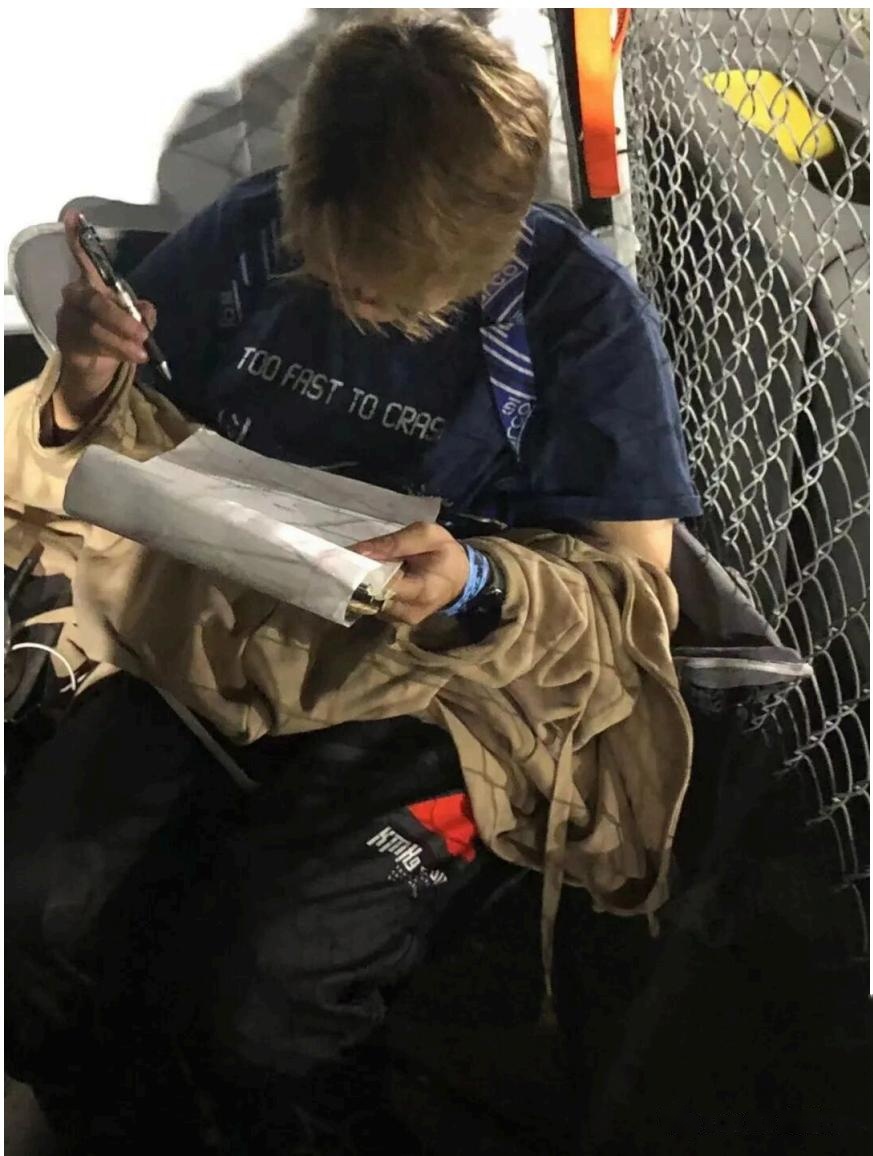
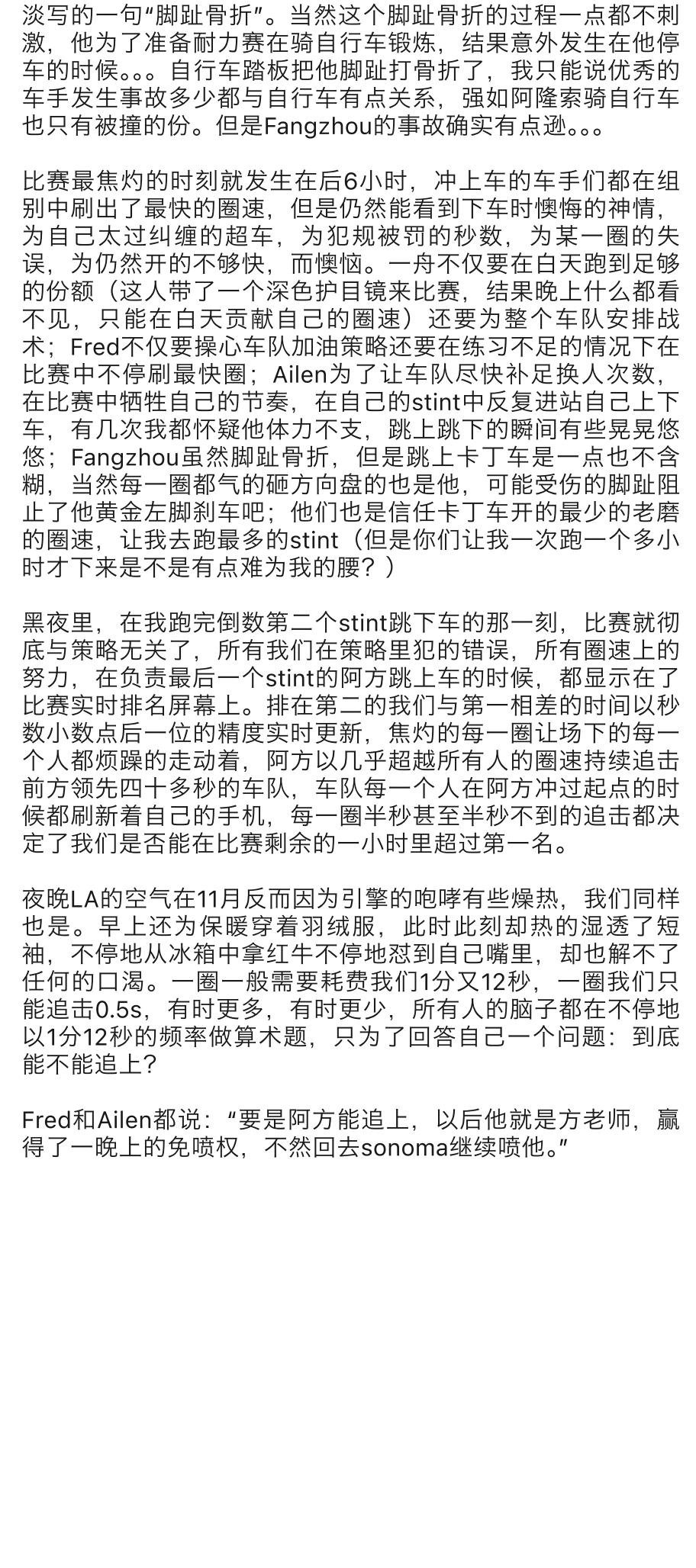
When I first saw Fangzhou before the race, I even doubted whether the guy could race. He showed up with his left foot in a splint, casually stating he had a "fractured toe." Of course, the story of this fractured toe wasn't thrilling at all. He was riding a bicycle to train for the endurance race, and the accident happened when he stopped... the bicycle pedal fractured his toe. I can only say that accidents involving excellent drivers always seem to have something to do with bicycles. Even someone as strong as Alonso gets hit while riding a bike. But Fangzhou's accident was admittedly a bit lame.
The most agonizing moments of the race happened in the final six hours. Every driver who jumped into the kart set the fastest lap times in our class, yet you could still see the look of regret on their faces when they got out — regret over a messy overtake, the seconds lost to a penalty, a mistake on a specific lap, or the feeling that they still weren't driving fast enough. Yizhou not only had to run his quota during the day (this guy brought dark tinted goggles to the race and consequently couldn't see anything at night, so he could only contribute his lap times during daylight) but also had to manage the tactics for the entire team. Fred not only had to worry about the refueling strategy but also had to constantly set fastest laps during the race despite having only three hours of sleep between a cross-country flight and qualifying. Meanwhile, Afang, our fastest driver, had to run stints on a track so bumpy it dislocated his ribs from the seat.
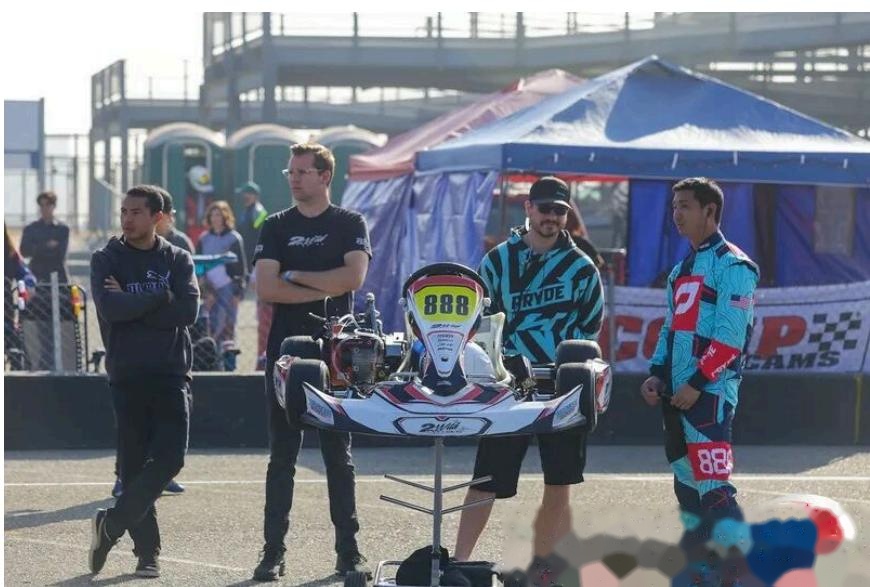
In the dark of night, the moment I jumped out of the kart after finishing the second-to-last stint, the race completely ceased to be about strategy. All the strategic errors we made, all the effort poured into our lap times, were displayed on the live timing screen when Afang, responsible for the final stint, jumped into the kart. In second place, our time gap to first was updating live to the tenth of a second. Every agonizing lap made everyone on the sidelines pace anxiously. Afang continuously chased the team ahead, who held a lead of over forty seconds, with lap times that outpaced almost everyone else. Every time Afang crossed the start line, everyone on the team refreshed their phones. The half-second — or even less than half a second — gained per lap piled onto the tension in a rhythm of one minute and twelve seconds.
The night air in LA in November was unexpectedly hot because of the roaring engines, and so were we. We wore down jackets in the morning to stay warm, but now we were sweating through our short sleeves, constantly grabbing Red Bulls from the cooler and downing them, though it did nothing to quench our thirst. A lap generally took us one minute and twelve seconds, and we were only catching up by half a second per lap — sometimes more, sometimes less. Everyone's brain was doing relentless math at a frequency of one minute and twelve seconds, just to answer one question: Can we actually catch them?
Fred and Allen both said: "If Afang can catch them, from now on he's Teacher Fang, and he earns the right not to get flamed tonight. Otherwise, we're going back to Sonoma and continuing to flame him."
After the race concluded on the second day, our strategy was mocked by the race officials. In the race report, the organizers wrote:
"Ironically, the SE category would have the closest race of any of the classes, with two teams emerging as the ones battling for the hardware in the end. Raising eyebrows with a P4 in the S2 class in qualifying, team Too Fast to Crash were the early favorites, and led their SE compatriots for the first third of the race. A slightly rocky start turned into superior lap times and more importantly, quick and mistake-free pit stops for team Live Laugh Kart, and they would take over the lead on lap 192, with the two teams nearly even in required stops.
The real turning point would be in the strategy; at the end of the race it would be drive time that would play a factor, with Too Fast to Crash making two extra pit stops than required, handing the advantage to Live Laugh Kart. It would be an advantage that they would maintain, but only just winning by just under 4.5 seconds after 12 hours."
Yes, sometimes life is just like a sports manga. My wife always complains that if a Japanese sports manga has an ending, it's never a perfect, happy one. I agree, and I've always thought those kinds of mangas are the best to read. But when it actually happens to you — the moment the checkered flag waves and your clenched fists relax — it's just frustration, then annoyance, then regret, and finally, acceptance. Everyone had some regrets. How great would it have been to send our wild mechanic Fred back to China with a first-place trophy? How great would it have been if I had listened to team orders and not pitted, saving that one unnecessary stop? How great would it have been if we had clarified the rules ahead of time and known that a penalty stop counted as a required pit stop?
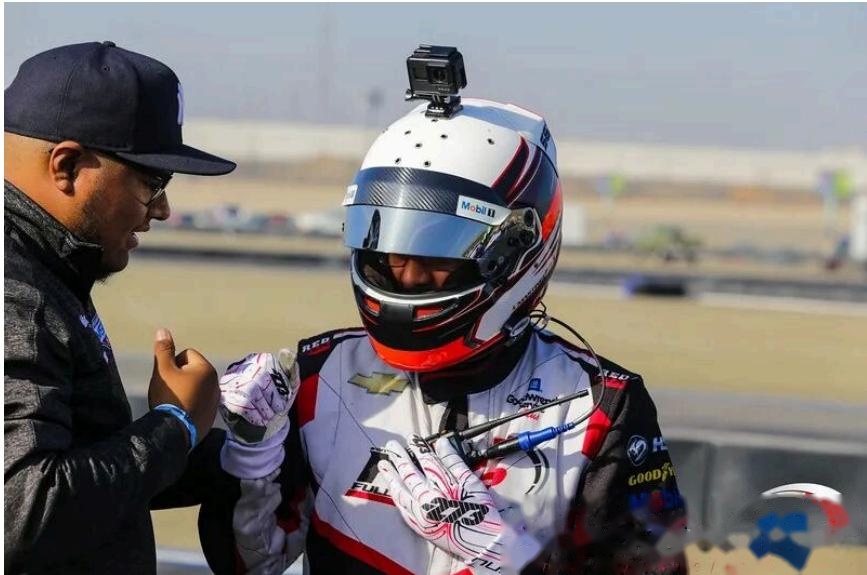
In a twelve-hour endurance race, we lost to first place by four and a half seconds. In competitive sports, results speak, and there's nothing left to say. We'll fight again next year.
At the very end, I want to conclude this article with a meme of our wild mechanic who returned to China:
"F*, I'm poor."**