
Every Rayquaza airframe flies the same control stack: fully automatic VTOL, manual/program/auto control modes, and level-6 wind resistance. Payload interfaces follow a common mechanical and electrical standard, so a mission payload moves between airframes without rework.
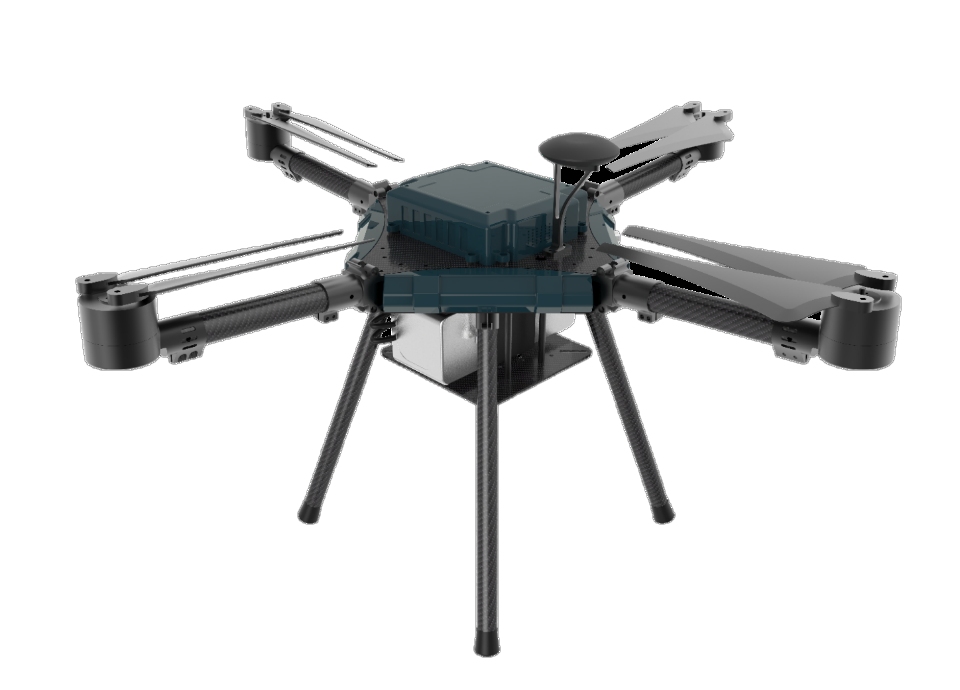
Rayquaza · Rotary
The scout of the family: a folding quad that packs into a flight case and launches in minutes. Built for short-range inspection, site survey, and rapid-reconnaissance tasks where a bigger airframe is wasted.
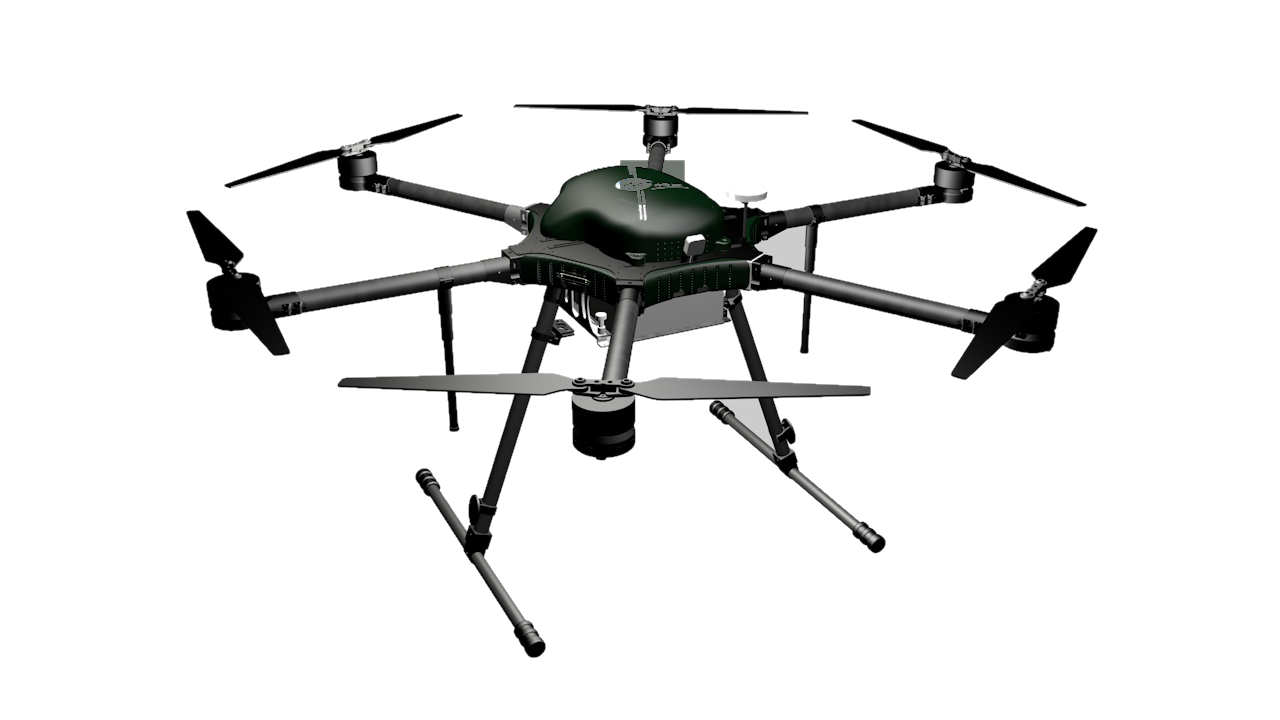
Rayquaza · Rotary
The workhorse hexacopter. Five kilograms of payload — mapping pods, multispectral cameras, sampling rigs — with the redundancy of six rotors and a 10 km control radius for beyond-line-of-sight operations.
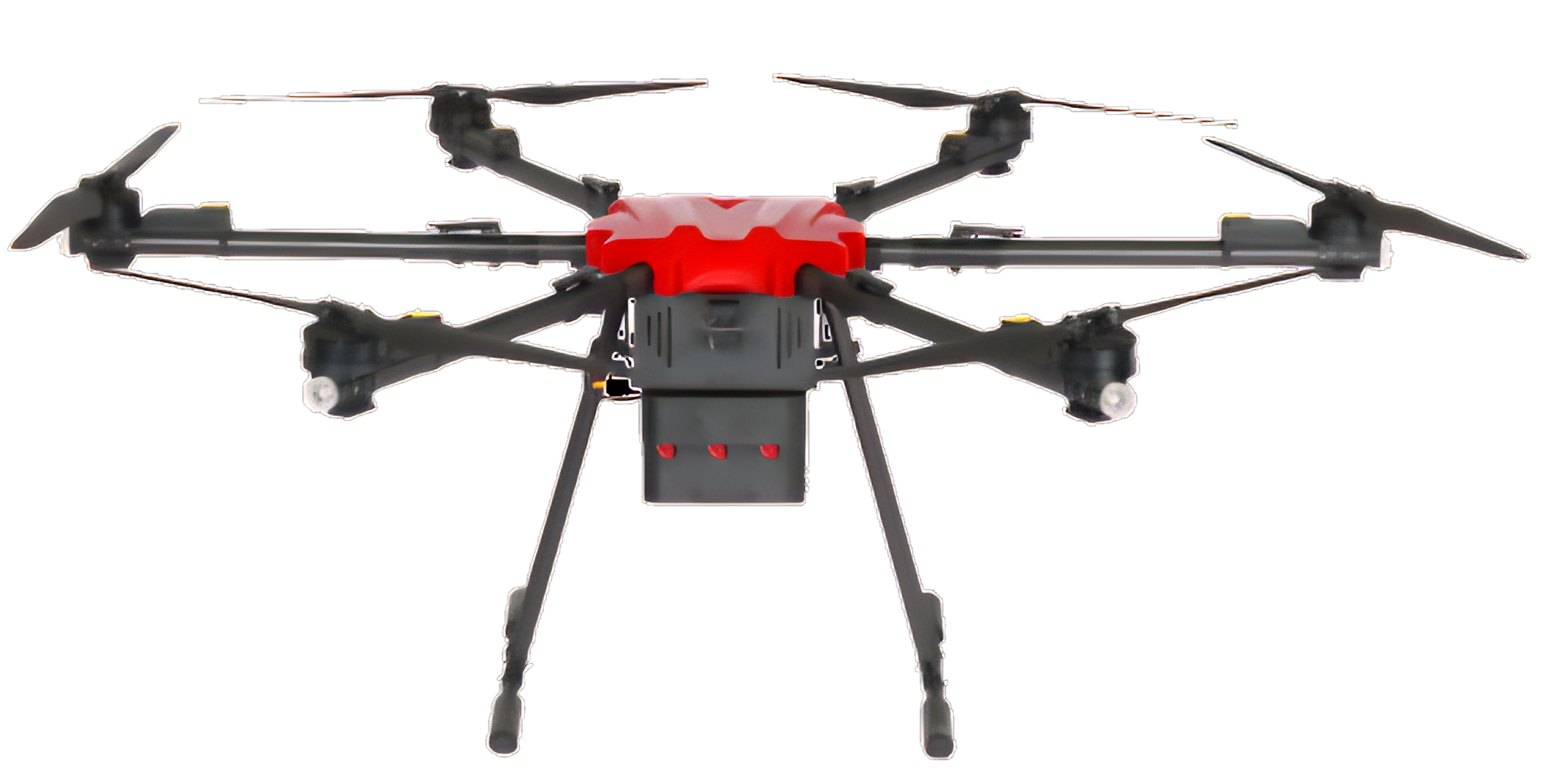
Rayquaza · Rotary
Ten kilograms of payload and a 20 km control radius — the Shadow Egret carries delivery pods, heavy sensor packages, and twin-payload survey fits where the Eagle runs out of lift.
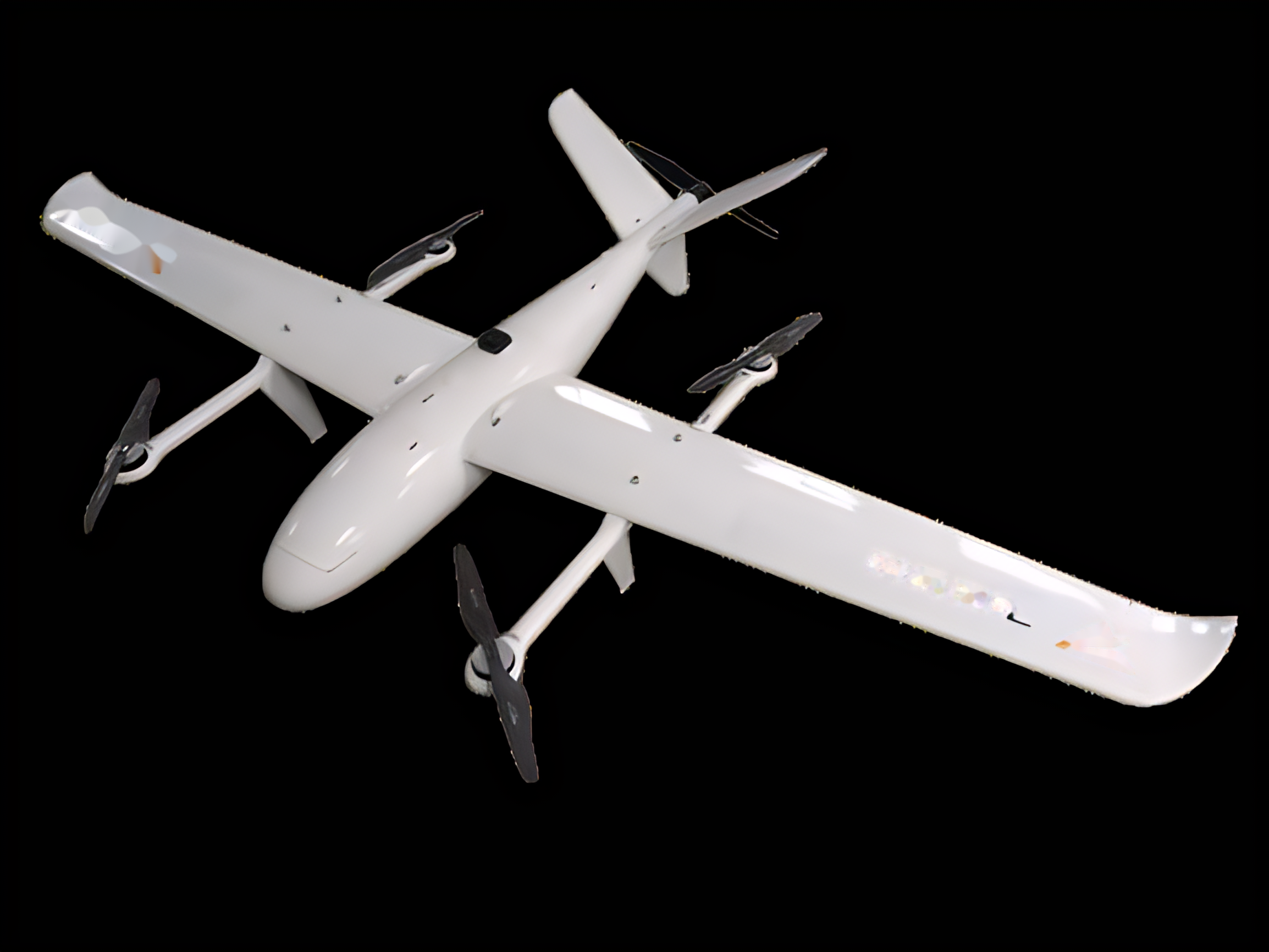
Rayquaza · VTOL Fixed-Wing
Vertical takeoff, fixed-wing cruise: 90 minutes aloft at 80 km/h with survey-grade positioning. The Phoenix turns large-area mapping and corridor inspection into single-sortie jobs.
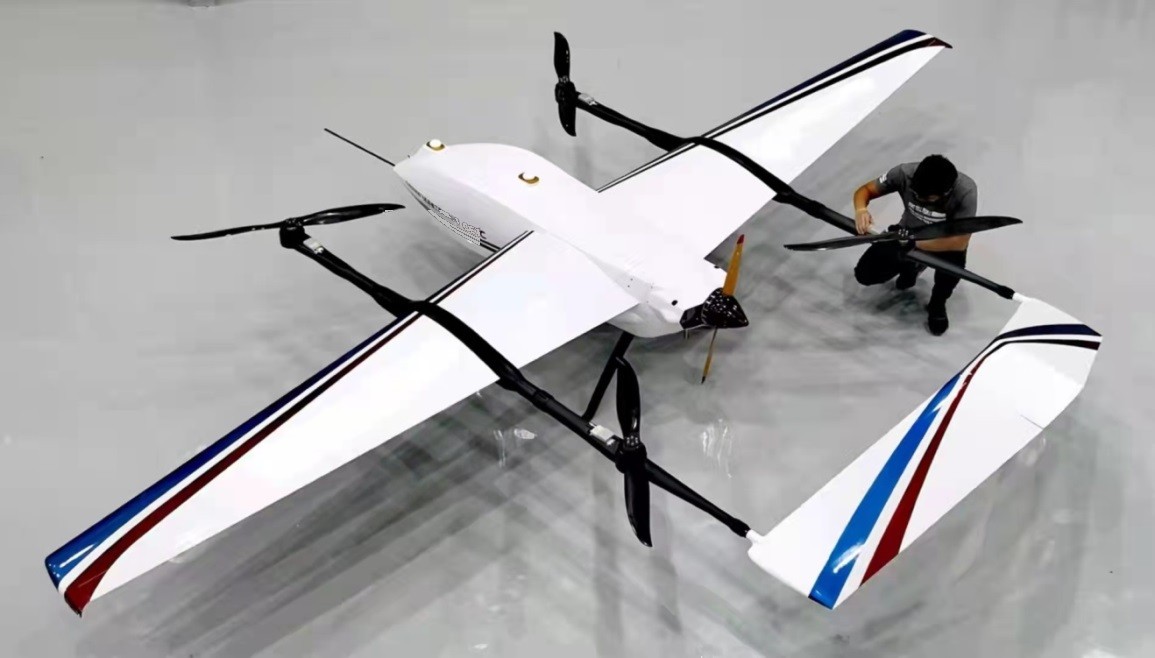
Rayquaza · VTOL Fixed-Wing Hybrid
The heavy lifter. A gasoline EFI engine plus electric lift motors deliver 4.5 hours with a 30 kg load — and up to 40 kg for shorter logistics runs. Differential positioning and 5 m track accuracy hold it on course across a 50 km radius.
Platforms are only half of the system. Rayquaza aircraft network through a self-forming mesh datalink and think through a family of onboard AI computers.
| Mesh Datalink | SOC Module | FPGA Module |
|---|---|---|
| Network size | 40 nodes per channel | ≥16 relay hops |
| Throughput | 90 Mbps peak (adaptive) | 30 Mbps in-network |
| Latency | 2–5 ms single hop | ≤15 ms |
| Band | 1415–1465 MHz | UHF / L band |
| Weight / Power | 60 g · 6–12 W | 330 g · 15–36 W |
| Environment | -40 to +80 °C | - |
| Onboard Computer | Nano | Pro | Ultra |
|---|---|---|---|
| AI performance | 2.0 TOPS | 6 TOPS | ≥100 TOPS (INT8) |
| Processor | Quad Cortex-A7 | 4×A72 + 4×A53 | NVIDIA Orin NX |
| Video | 4×1080p@30 | 8K@30 encode | 4K@60 encode |
| Target recognition | 640×480 @30 fps | 640×480 @90 fps | 1080p @60 fps |
| Interfaces | GbE · UART · CAN | 2×GbE · 3×UART · CANFD · PCIe | GbE · UART · CAN |
| Power | ≤8 W | ≤15 W | ≤50 W |
Every aircraft's live track, status, and payload coverage rendered on 2-D and 3-D maps — one screen for the whole fleet, including coverage-rate and positioning-accuracy analytics after the sortie.
Distributed, deep-reinforcement-learning task assignment: missions are split, matched, and re-planned across aircraft in real time, with automatic charging and recovery handling.
Onboard models run directly on the aircraft computer — no ground link required. Siamese-feature tracking holds targets through occlusion at up to 1080p/90 fps on the Ultra module.